
The rise of artificial intelligence (AI) has transformed nearly every industry, and mental health care is no exception. Integrating AI into mental healthcare is reshaping the landscape of mental healthcare; it represents an evolution and a revolution in mental well-being. For ketamine clinic providers, AI tools offer tantalizing promises of efficiency, cost savings, and streamlined operations. From automating appointment reminders to generating marketing content, the applications are endless. At the same time, AI shouldn’t be considered as a replacement for some of the critical ketamine therapy operations in a field built entirely on human connection, trust, and deeply personal healing journeys. The overreliance on AI poses significant risks, not just to your clinic’s reputation, but to the very patients you serve.
While ketamine-assisted therapy represents a new frontier in mental health treatment, serving people who have exhausted conventional options, these patients arrive at your door vulnerable, desperate for relief, and searching for genuine human understanding. When AI begins to replace the essential human elements of your practice, you risk undermining the therapeutic relationship that makes ketamine treatment so transformative. Below are the “dos and don’ts” for ketamine clinic mental health providers when integrating AI into their practices.
Ketamine Clinic AI Dos
Use Chatbots to Accommodate Prospective Patients
Americans are increasingly turning to AI chatbots for mental health support, but not just for accessibility to information or cost effectiveness. As the healthcare landscape becomes increasingly digital, chatbots serve as an efficient first point of contact, addressing common questions and providing timely responses to prospective patients.
A recent survey revealed that more than 1-in-3 respondents cite “fear of judgment” as the primary driver behind this trend. Even when therapy is accessible, the discomfort of being judged is enough to push people to seek AI conversations instead.
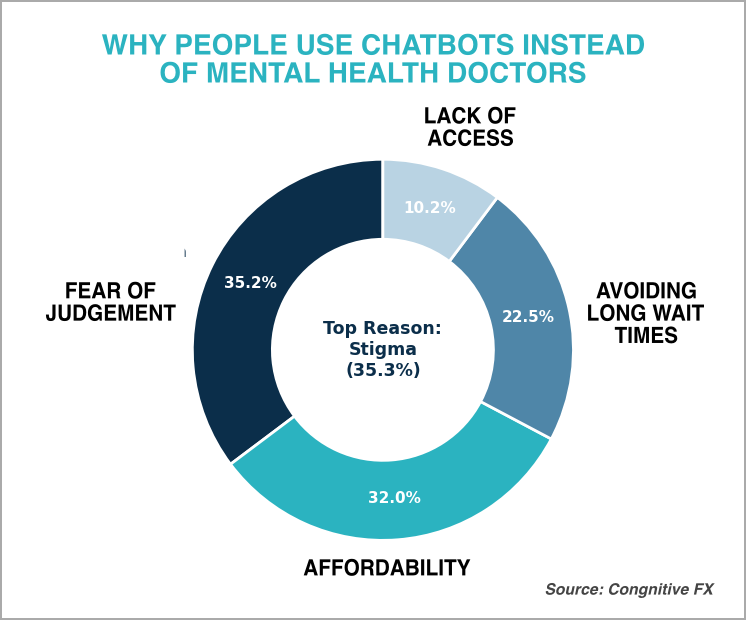
Other findings of this study were equally remarkable.
- 43.75% of people prefer AI chatbots to discuss mental health issues first, rather than family, friends, or a doctor
- 38% of respondents use AI chatbots weekly for mental health issues
- 64.25% report moderate to major improvement in their mental health after using AI chatbots
If your ketamine clinic’s website isn’t using a carefully-programmed chatbot to guide patients through the discovery phases of ketamine therapy, you are missing out on critical conversations and potential conversions. At Ketamine Marketing Pros, we can help you launch a powerful, patient-converting chatbot.
Streamline Backend Operations with AI Automations
AI-enabled tools can ease the administrative burden on ketamine therapy clinicians, allowing them to spend more time seeing patients, and reducing burnout in the existing workforce. Perhaps most promising at this time, AI can help alleviate paperwork demands on overworked clinicians. These time-consuming responsibilities ultimately divert attention from patient care.
AI-powered tools can automate significant portions of progress notes, treatment plans, and message responses, reducing the time clinicians spend on mental health-related tasks. These systems can also flag inconsistencies in lab results or gaps in care, prompting proactive attention to potential issues. In addition, AI-driven scheduling tools can match available appointment slots with patients’ preferences and availability, reducing the need for constant coordination between patients and clinicians. This savings in time helps prevent burnout and improves efficiency by allowing clinicians to focus more on their core mission; providing high-quality ketamine therapy care to patients and addressing the growing demand for care.
Wearable Devices for Ketamine Therapy Patient Monitoring
AI-enabled devices wearable devices that track physiological and psychological indicators during ketamine infusions can greatly improve both the safety and effectiveness of treatment. These technologies offer continuous, non-invasive monitoring of vital metrics like heart rate, blood pressure, oxygen saturation, and even brain activity. By capturing real-time data, wearables enable healthcare professionals to fine-tune ketamine dosages, quickly identify early signs of possible side effects, and tailor treatment plans to each patient’s unique needs. Integrating such technology into ketamine therapy can revolutionize care delivery, ensuring patients receive optimal, individualized treatment while reducing potential risks.
A key advantage of using wearable monitoring during ketamine therapy is the ability to adjust dosages in real time. Unlike traditional ketamine treatment methods, which typically follow standardized dosing protocols based on general recommendations, wearables allow for a more tailored approach. Since every patient may metabolize and respond to ketamine differently, depending on factors such as metabolism, body composition, and overall health, wearable devices offer clinicians immediate, individualized data. This empowers healthcare providers to refine dosing based on the patient’s unique physiological responses, leading to more personalized and effective treatment.
One notable device, Apollo wearable, which sends a signal resemblant of human touch to the wearer’s wrist or ankle. Its manufacturer, Apollo Neuro, promotes this device as “a wearable hug,” likening the “Apollo Vibes” that it emits low-frequency sound waves that are felt rather than heard, to “music your body can feel.” The device is said to be most effective 15 minutes prior to ketamine therapy sessions, helping patients enter the experience feeling calm and relaxed. Once the session is underway, the client can control the Apollo by pressing its buttons and activating its vibrations, giving the patient a sense of control and agency during the journey as if they are deep breathing.
Ketamine Clinic AI Don’ts
The Dangers of Losing Personalization
Personalization sits at the heart of effective mental health care. Every patient who walks through your ketamine clinic’s doors carries a unique history, a distinct set of traumas, specific treatment goals, and individual responses to medication. When AI systems begin handling patient communications, treatment recommendations, or follow-up care, the nuanced understanding that defines quality mental health care quickly erodes.
Consider the patient who has struggled with treatment-resistant depression for fifteen years. They have tried countless medications, endured side effects, and experienced the crushing disappointment of failed treatments. When they finally find their way to ketamine therapy, they need to feel seen as an individual, not as a data point processed through an algorithm. If your intake forms, treatment plans, and follow-up communications all read like templated outputs from a language model, patients will notice. They will feel the absence of genuine human attention, and that feeling can undermine their trust in the entire ketamine therapy treatment process.
AI can certainly assist with organizing patient information or flagging potential concerns for provider review. However, the actual crafting of treatment approaches, the tone of communications, and the therapeutic relationship must remain firmly in human hands. Your patients chose your clinic because they wanted expert human care, not because they wanted to interact with sophisticated software.

The Ethical Minefield of AI-Generated Patient Testimonials
Patient testimonials serve as powerful marketing tools for ketamine clinics. Prospective patients, often skeptical and afraid, look to the experiences of others to gauge whether treatment might work for them. Authentic testimonials build trust, demonstrate real-world outcomes, and help individuals take that difficult first step toward seeking help.
The temptation to use AI to generate or embellish testimonials represents one of the most dangerous ethical violations a ketamine clinic can commit. Fabricated testimonials are not just dishonest marketing, they constitute a form of fraud that can cause genuine harm. A person suffering from severe depression or PTSD might make treatment decisions based on fictional success stories, investing money, hope, and emotional energy into expectations built on lies.
Beyond the ethical concerns, AI-generated testimonials often carry telltale signs of inauthenticity. They tend toward generic language, lack specific details, and feel emotionally hollow. Savvy consumers increasingly recognize these patterns, and once your clinic develops a reputation for inauthentic content, rebuilding trust becomes nearly impossible.
If you struggle to collect genuine patient testimonials, focus on improving your follow-up processes and making it easy for satisfied patients to share their experiences. Offer simple feedback forms, follow up at appropriate intervals, and always obtain proper consent before sharing any patient stories. The extra effort required to gather authentic testimonials pays dividends in credibility that no AI-generated content can match.
The Problem with 100% AI-Generated Blog Content
Content marketing has become essential for ketamine clinics seeking to educate the public, establish authority, and attract new patients. In fact, content marketing costs 62% less than outbound marketing and the leads are 6 times as likely to convert. Blog posts explaining ketamine’s mechanisms of action, discussing what patients can expect during treatment, or exploring the research behind ketamine therapy all serve valuable purposes. However, when clinics rely entirely on AI to generate this content, they sacrifice quality, accuracy, and authenticity.
AI-generated blog posts often suffer from several critical flaws. First, they may contain factual errors or outdated information. Language models are trained on historical data and may not reflect the latest research, regulatory changes, or best practices in ketamine-assisted therapy. In a medical field where accuracy literally affects patient safety, publishing incorrect information damages your credibility and potentially harms readers.
Second, purely AI-generated content lacks the clinical insight and real-world experience that your providers bring to every patient interaction. A blog post about managing integration after ketamine sessions becomes far more valuable when it includes observations from clinicians who have guided hundreds of patients through that process. AI cannot replicate the wisdom gained from years of clinical practice.
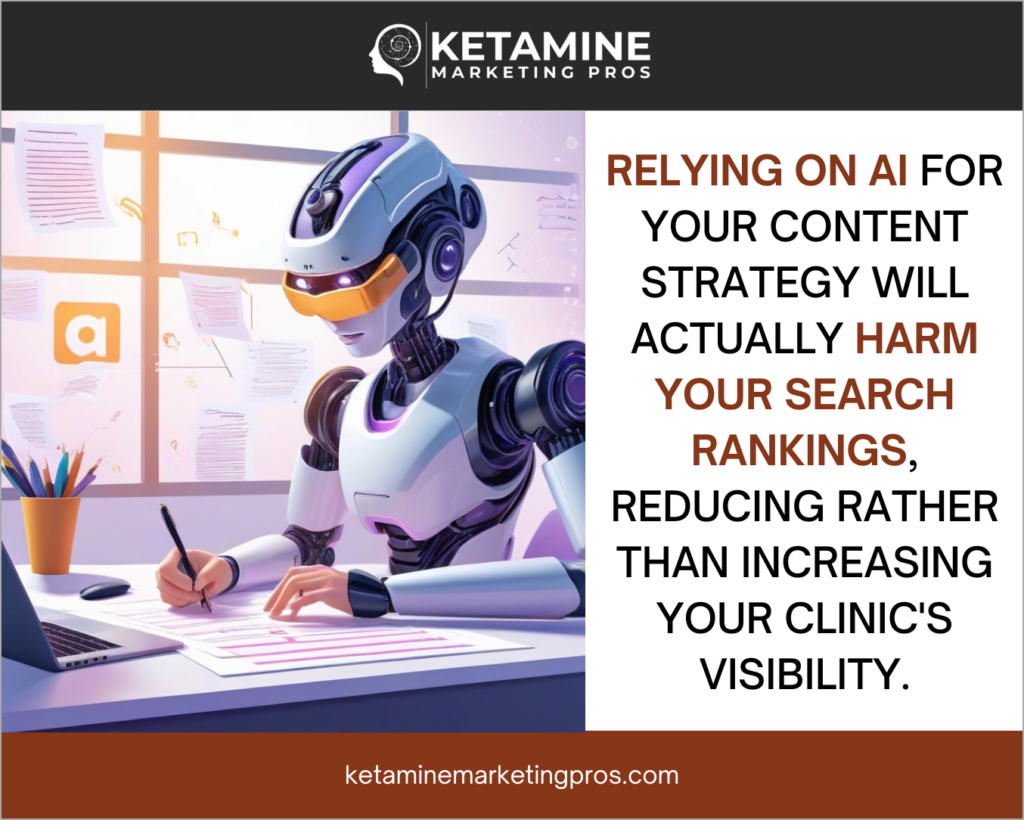
Third, search engines have grown increasingly sophisticated at identifying AI-generated content. Google’s algorithms now actively work to surface helpful, human-created content while demoting low-quality AI output. Relying on AI for your entire content strategy may actually harm your search rankings, reducing rather than increasing your clinic’s visibility. The balanced approach involves using AI as a starting point or research assistant while ensuring that qualified humans review, edit, and enhance every piece of published content. Your blog posts should reflect your clinic’s unique voice, incorporate real clinical insights, and demonstrate the expertise that sets your practice apart.
Learn how to optimize your ketamine therapy content for ChatGPT and AI Search.
The Visual Credibility Crisis: Poorly AI-Generated Graphics
Visual content plays a crucial role in how potential patients perceive your clinic. Your website images, social media graphics, and marketing materials all contribute to impressions of professionalism, trustworthiness, and quality of care. When clinics turn to AI image generators to create visual content, the results often undermine rather than enhance their professional image.
Current AI image generation technology, while impressive in many applications, frequently produces visuals with obvious flaws. Hands with incorrect numbers of fingers, faces with asymmetrical features, medical equipment that looks subtly wrong, or environments with impossible physics all signal to viewers that corners were cut. In a healthcare context, where patients must trust providers with their mental health and physical safety, these visual shortcuts suggest a clinic that prioritizes cost savings over quality.
And, AI-generated images of people, particularly those meant to represent patients or staff, raise ethical questions about representation and authenticity. Using AI-generated faces to populate your website feels deceptive, even if technically legal. Patients may wonder what else about your clinic’s presentation might be fabricated.
Invest in professional photography that showcases your actual facility, real staff members, and the genuine atmosphere of your clinic. Stock photography from reputable sources, while not ideal, remains preferable to obviously artificial AI-generated images. Your visual brand should reflect the same commitment to authenticity and quality that defines your clinical care.
Additional Areas Requiring Human Oversight
Beyond these major concerns, several other aspects of ketamine clinic operations demand careful human involvement despite AI’s capabilities.
- Clinical documentation must remain under direct provider supervision. While AI can assist with transcription or organizing notes, the clinical judgments, observations, and treatment decisions documented in patient records require human expertise and accountability. Errors in clinical documentation can affect patient safety and create legal liability.
- Crisis response represents another area where AI falls dangerously short. Patients undergoing ketamine therapy may experience difficult emotions, challenging insights, or psychological crises. Automated systems cannot provide the nuanced, compassionate response these situations demand. Ensure that human providers remain accessible and that AI systems never serve as the sole point of contact for patients in distress.
- Insurance communications and prior authorizations require careful human review. While AI can help draft initial documents, the specifics of each patient’s situation, any potential insurance reimbursement requirements, and clinical justification need human attention to navigate successfully.
- Community engagement and relationship building with referral sources, other healthcare providers, and local mental health organizations must remain authentically human. These relationships form the foundation of a sustainable practice and cannot be maintained through automated communications.
AI as Assistant, Not Replacement
The fundamental question every ketamine clinic provider must ask is simple: Does this use of AI serve my patients’ best interests, or does it merely serve my convenience?
When AI helps providers work more efficiently while maintaining quality and authenticity, it represents a valuable tool. When AI replaces the human elements that make mental health care effective, it becomes a liability. Your patients seek ketamine treatment because they want to feel better, to reclaim their lives from depression, anxiety, PTSD, or chronic pain. They come to your clinic because they need human expertise, compassion, and understanding. Honor that trust by ensuring that artificial intelligence enhances rather than replaces the genuine human care that defines excellent mental health treatment.
The clinics that thrive in the coming years will be those that master the balance of leveraging AI’s capabilities while preserving the authentic human connections that make healing possible.
Ready to Take Your Ketamine Clinic to the Next Level?
The future of mental health care is here—and ketamine therapy is leading the way. But to truly thrive, your clinic needs to be visible in your community, earn patient trust, and communicate its life-changing potential effectively. That’s what we’re here to help you accomplish.
Partnering with Ketamine Marketing Pros is more than just an investment in marketing; it’s an investment in your clinic’s growth, credibility, and ability to make a difference in patients’ lives. Let us help you attract more patients, increase your revenue, and position your clinic as a leader in the field of mental health and alternative therapies.
Contact Us Today for a FREE Marketing Consultation!